

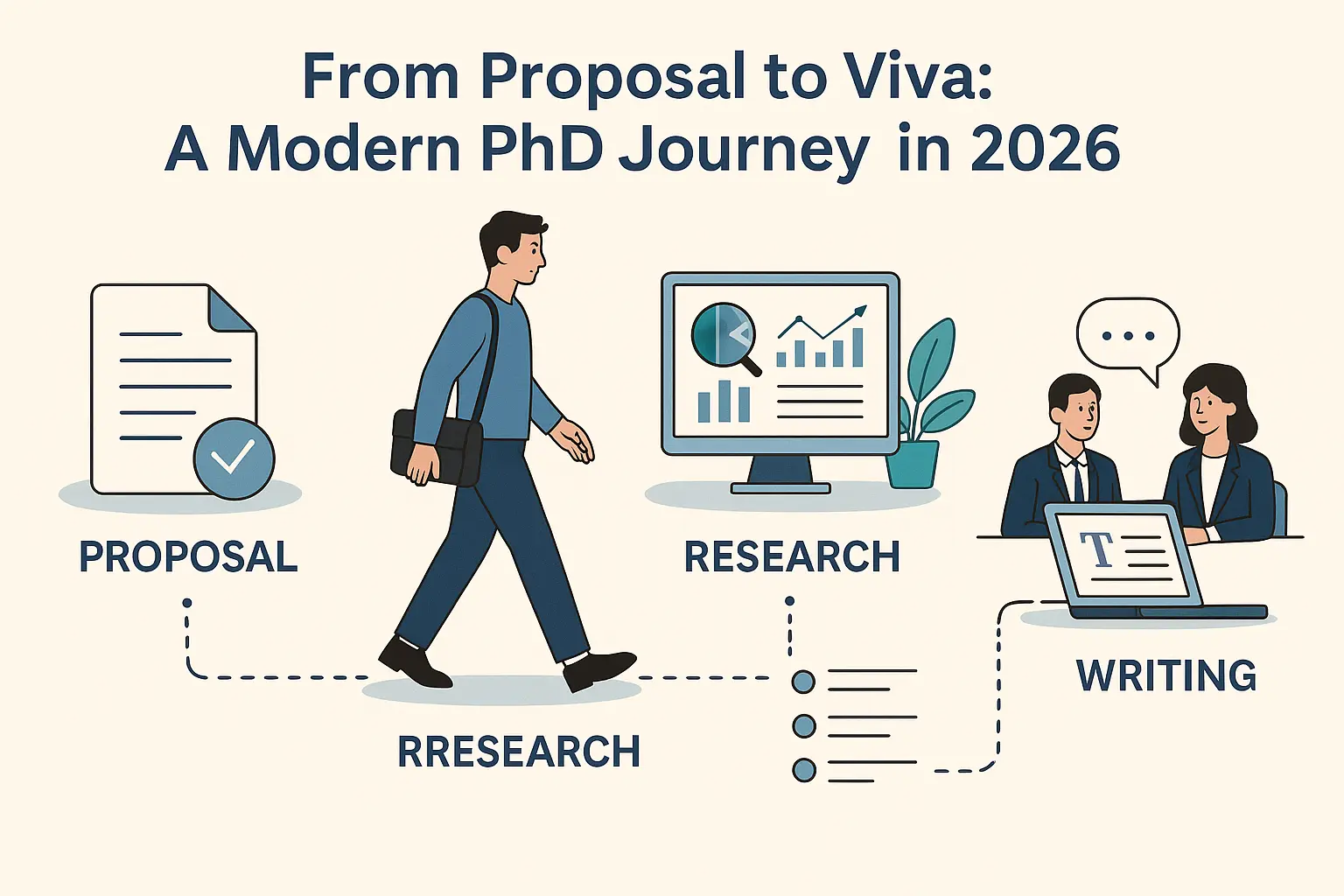
The doctoral landscape has transformed dramatically over the past decade. In 2026, completing a PhD is no longer a strictly traditional academic pursuit dominated solely by reading, writing, and occasional supervision. Today, the modern PhD journey is shaped by digital transformation, artificial intelligence, global research competition, and increasing expectations for societal impact, interdisciplinary methods, and transferable skills.
Yet at its heart, the PhD remains what it has always been, a rigorous, deeply personal intellectual journey requiring persistence, curiosity, critical thinking, and resilience. This article maps the entire modern PhD journey from proposal to viva, highlighting new practices, expectations, and strategies that doctoral candidates must navigate in 2026.
The Evolving Nature of Modern PhD Journey in 2026
Doctoral research in 2026 is marked by four defining trends shaping the modern PhD journey:
- AI-assisted research processes
- Greater interdisciplinary collaboration
- Stronger emphasis on societal relevance and impact
- Heightened scrutiny of research integrity and ethics
While earlier generations worked primarily with print sources and ad-hoc supervision meetings, today’s doctoral candidates manage complex workflows, multiple digital platforms, evolving supervisor expectations, and emerging academic technologies that influence everything from literature reviews to viva preparation.
Understanding these contextual shifts is essential, as they frame the expectations placed on doctoral researchers today.
Beginning the Journey: Crafting a Proposal That Stands in 2026
The proposal stage has always been the gatekeeper of the PhD, but in 2026 its expectations have changed significantly. A strong doctoral proposal must demonstrate not only intellectual merit, but readiness for research in a fast-paced digital environment.
1. Clear Research Problem and Rationale
Proposals must articulate why a topic matters, academically and socially. In 2026, examiners increasingly look for relevance to pressing global issues such as sustainability, digital transformation, AI ethics, governance, health innovation, and inclusion.
2. Integration of AI Tools for Scoping
Candidates are now expected to show awareness of modern research tools. Using platforms like Elicit, ResearchRabbit, or Scite during early scoping is not optional — it is simply part of the modern PhD journey.
Demonstrating familiarity with AI-assisted searching and synthesis signals preparedness and research maturity.
3. Methodological Feasibility and Data Ethics
Ethics committees are stricter in 2026. Proposals must demonstrate:
- Data transparency
- Privacy protections
- Responsible use of AI and automation
- Clear pathways for obtaining ethical approval
4. Realistic Scope and Timelines
Many institutions now require a detailed project timeline that includes:
- AI-supported literature management
- Digital data collection
- Time for dissemination, conferences, and impact activities
- Buffer periods for unexpected delays
A well-planned proposal reflects a candidate who understands the modern PhD journey holistically.
Settling Into Year One: Building Foundations in the Modern PhD Journey
Early-stage doctoral research in 2026 focuses heavily on building capacity, mastering digital research tools, and establishing a sustainable workflow.
Developing Core Researcher Skills
Institutions now provide structured training in:
- Research design
- Data analytics
- AI-assisted literature review
- Coding, qualitative software, and automation
- Academic writing and argumentation
PhD candidates must demonstrate agility in adopting new methods and tools.
Establishing a Productive Supervision Relationship
Supervision is no longer limited to monthly in-person meetings.
In 2026, it includes:
- Online check-ins
- Digital project management tools
- Shared cloud-based research folders
- AI-assisted document review
Good communication, transparency, and clarity around expectations are essential for avoiding misunderstandings that slow progress.
Conducting the Literature Review for 2026 Standards
The literature review is deeper, broader, and more analytical than before. AI helps accelerate but does not replace critical reading.
Candidates must show:
- Thematic mapping
- Recognition of conceptual tensions
- Understanding of emerging debates
- Identification of clear research gaps
The standard for scholarship is significantly higher than it was even five years ago.
Year Two: Data Collection, Methodology, and Emerging Identity as a Researcher
The second year often defines the character of the entire PhD.
Data Collection in a Digitally Integrated World
Digital, hybrid, and AI-enabled data collection methods are common, including:
- Virtual interviews
- Online surveys
- Remote sensors or digital traces
- Automated transcription tools
- AI-assisted qualitative coding
Research ethics committees now explicitly require transparency in how digital tools are used to collect, store, and process data.
Developing Methodological Confidence
Doctoral candidates refine their methodological frameworks, gaining mastery over:
- Qualitative, quantitative, or mixed methods
- Software such as NVivo, SPSS, R, ATLAS.ti, or Python
- Reliability, validity, and trustworthiness criteria
In 2026, methodological literacy is essential to demonstrate independence as a researcher.
Forming a Research Identity
This stage marks the transition from student to emerging scholar.
Researchers begin:
- Writing early conference papers
- Submitting abstracts
- Collaborating with peers
- Presenting findings internally
The modern PhD journey demands visibility and engagement.
Year Three: Analysis, Contribution, and Writing Chapters
By year three, candidates enter the most intense and intellectually challenging phase of the doctorate.
Data Analysis Enhanced by AI Tools
AI tools now assist with:
- Code suggestion
- Pattern detection
- Thematic clustering
- Statistical analysis
- Visualisation of findings
However, human judgement remains central to interpretation.
Developing the Thesis Narrative
A well-structured thesis must show:
- Clear analytical depth
- Strong theoretical contribution
- Alignment between research question, methodology, and findings
- Coherence between chapters
The modern PhD journey places particular emphasis on clarity, purpose, and contribution.
Writing for Publication
Publishing during the doctorate has become increasingly expected in 2026.
Candidates often prepare:
- Conference papers
- Journal submissions
- Policy briefs
- Systematic review articles
Writing for publication builds confidence and increases competitiveness for academic or industry roles.
The Final Year: Completing the Thesis and Preparing for Submission
The final year demands precision, discipline, and strategic planning.
Revision, Editing, and Academic Integrity
AI editing tools are widely used for:
- Grammar refinement
- Structural feedback
- Coherence checks
- Reference verification
However, candidates must ensure they follow AI-use disclosure policies and avoid over-reliance.
Supervisor Sign-Off
By late stage, supervisors expect:
- A polished full draft
- Clear contribution statements
- Methodological transparency
- Ethical compliance
- Strong literature grounding
Clear communication and early feedback cycles are essential.
Final Submission Requirements
Many institutions now require digital submission formats such as:
- Interactive PDFs
- Online appendices
- Data repositories
- AI-use declarations
The PhD in 2026 is fundamentally digital in documentation and process.
The Final Stage of the Modern PhD Journey: Preparing for the Viva
The viva in 2026 remains one of the most rigorous academic examinations, but its format has evolved.
Understanding the Viva Format
Vivas may be:
- Face-to-face
- Fully online
- Hybrid
Candidates must prepare for digital communication, screen-sharing, and secure online protocols.
Mastering Common Viva Questions
Candidates must demonstrate:
- Deep knowledge of the literature
- Defence of methodological choices
- Awareness of limitations
- Understanding of practical contributions
- Clarity on future research directions
The viva is a test of intellectual maturity and reflective expertise.
AI Assistance for Viva Preparation
AI can support viva readiness by helping candidates:
- Generate mock examiner questions
- Practise explanations
- Summarise key arguments
- Identify potential weaknesses
Used wisely, AI becomes an effective revision partner.
Life After the Viva: Becoming a Doctor in the Modern Research Landscape
Passing the viva marks the beginning of a new phase in the modern PhD journey.
New doctors must navigate:
- Postdoctoral pathways
- Industry research opportunities
- Academic job markets
- Fellowships and grants
- Digital academic identity and online presence
The modern world expects adaptability, collaboration, and ongoing research engagement.
Challenges Unique to the Modern PhD Journey in 2026
Doctoral candidates today face unprecedented pressures, including:
- Competitive funding landscapes
- High expectations for publication
- Digital overload
- AI ethics complexity
- Work–life imbalance
- Economic uncertainty
These pressures highlight the importance of institutional support, supervisor training, and mental health initiatives.
Strategies for Thriving in the Modern PhD Journey
To succeed in 2026, candidates should adopt strategies rooted in balance, structure, and reflection.
- Maintain a realistic workflow
- Use AI appropriately and ethically
- Build strong supervisory relationships
- Engage in writing groups and academic communities
- Develop resilience and self-care practices
- Seek peer support and mentorship
- Celebrate milestones
- Keep track of small wins and intellectual growth
Thriving in a modern PhD is possible with proactive planning and sustainable research habits.
Conclusion: The Modern PhD Journey Is Demanding, Digital, and Transformative
The PhD in 2026 is more complex, interconnected, and technology-driven than ever before. It demands intellectual robustness, digital competence, and emotional resilience. Yet it is also more rewarding — offering broader career pathways, richer tools, and greater opportunities for impact.
From proposal to viva, the modern PhD journey is a profound process of becoming — a transformation into an independent researcher equipped for the challenges of a rapidly evolving academic and professional world.
Visit our other human resource certifications
Visit our other artificial intelligence certifications
Visit our other digital technology certifications
Visit our other higher education certifications
Visit our other quality and lean six sigma certifications
Visit our other strategy and management certifications
The Art of Crafting Impactful Case Studies
Transforming Businesses with Strategic Case Studies
Case Studies: A Tool for Change in Social Work
Case Studies in Education: A Comprehensive Overview
The Emergence of Case Studies in Behavioral Sciences
Responses