

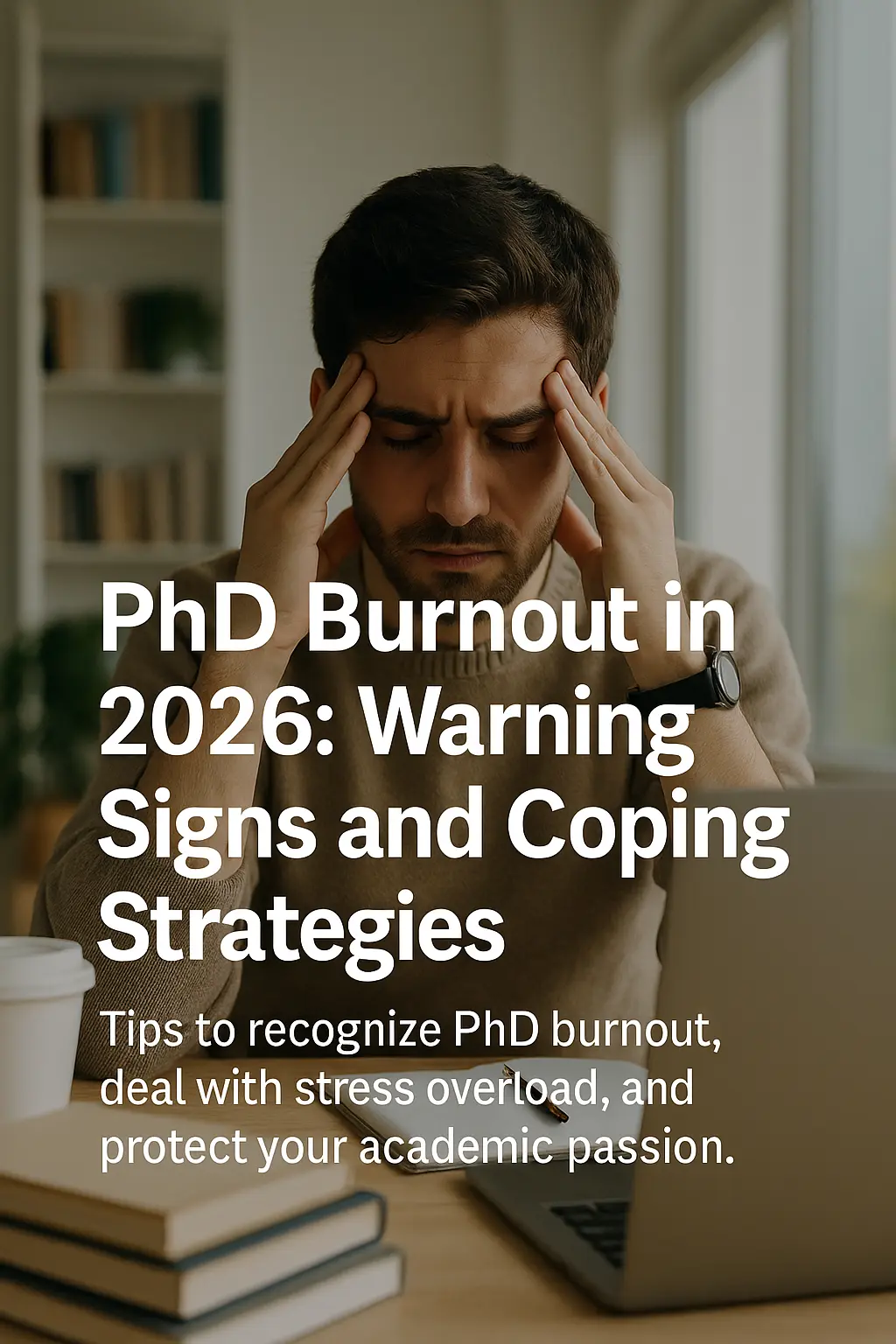
Introduction: Burnout Is No Longer a Buzzword
The pursuit of a PhD is often romanticised as a noble intellectual journey. In reality, for many doctoral students in 2026, it’s a complex and emotionally taxing experience, often marked by isolation, uncertainty, and unrelenting pressure. A recent Nature survey revealed that over 75% of PhD candidates report moderate to severe levels of stress, with nearly half experiencing symptoms consistent with burnout.
With rising demands for publications, uncertain job prospects, and the integration of generative AI into research processes, the doctoral landscape is changing fast. And unless students—and institutions—respond proactively, burnout will continue to undermine research quality, mental health, and long-term academic careers.
What Exactly Is PhD Burnout?
What is PhD Burnout? Understanding the Phenomenon
Burnout is not merely about being tired — it is a chronic state of emotional, physical, and mental exhaustion resulting from prolonged stress and overwhelming demands.
In the context of doctoral study, burnout typically emerges from a combination of factors: intense academic pressure, uncertain or extended timelines, heavy workloads (research, teaching, publication), financial or personal stress, and maintaining a balance between work and life commitments. ResearchGate
Crucially, burnout among PhD researchers is associated not only with exhaustion, but also with cynicism (emotional detachment or negativity towards one’s work) and a sense of reduced academic efficacy or loss of purpose. The Savvy Scientist
Recognising these underlying dimensions is essential for early detection and intervention.
Warning Signs: How to Recognise PhD Burnout Early
Burnout often develops gradually, making early symptoms easy to overlook or rationalise. Below are common indicators, drawn from both academic research and anecdotal accounts of doctoral researchers.
1. Physical & Health-Related Symptoms
- Persistent fatigue, even after “enough” sleep.
- Frequent headaches, muscle tension, gastrointestinal issues or weakened immunity.
- Sleep disturbances — difficulty falling or staying asleep, irregular sleep patterns.
2. Emotional and Psychological Symptoms
- A growing sense of hopelessness, cynicism or emotional detachment towards research.
- Persistent anxiety, irritability, mood swings, or feelings of inadequacy. david.bozward.com
- Decline in motivation or enjoyment of research tasks previously found meaningful. Many early-career researchers report waking up and “dreading going to the lab” even if they once cared deeply about their work.
3. Cognitive and Behavioural Symptoms
- Struggling with concentration, memory, or decision-making (the “mental fog” effect).
- Procrastination, avoidance of tasks, or inability to complete even “small” research activities.
- Withdrawal from social interaction, collaborations, or academic community. A tendency to isolate oneself.
4. Professional & Academic Signs
- Reduced academic output, missed deadlines, or repeated difficulty in meeting milestones.
- Doubts about the value or significance of one’s research or a growing sense that “this no longer matters.”
- Consideration of dropping out, or thoughts of abandoning the doctoral journey.
Recognising these warning signs early can be the difference between temporary stress and long-term burnout — and sets the stage for effective coping and recovery.
Why PhD Burnout Matters: Consequences Beyond Tiredness
Burnout affects more than just mood — its consequences are far-reaching:
- Mental health deterioration: Chronic burnout significantly increases risk of anxiety disorders, depression, and other psychiatric concerns among doctoral students.
- Academic disruption: Burnout undermines productivity, quality of work, creativity, and can cause delay or dropout.
- Reduced quality of life: Physical health issues, social withdrawal, impaired relationships, and a feeling of ongoing inadequacy or failure.
Therefore, treating PhD burnout as an expected “part of the PhD” trivialises serious mental health risks and undermines long-term academic and personal well-being.
Coping Strategies: How to Manage and Prevent PhD Burnout
Recovery and prevention require intentional, sustained strategies, both personal and structural. Below are evidence-based and widely recommended approaches for PhD and early-career researchers.
1. Prioritise Sleep, Rest and Physical Well-Being
Healthy sleep is fundamental. In one large survey of graduate students, better sleep duration and quality was associated with lower levels of exhaustion and burnout.
- Establish a sleep routine — aim for 7–9 hours per night where possible.
- Incorporate downtime and rest periods — allow yourself days off, avoid working long weeks with no breaks.
- Engage in regular physical activity — even light exercise improves mood, energy and stress resilience. Universities often have free or low-cost facilities for students.
A healthy body supports a healthy mind — and doctoral research requires both.
2. Build Supportive Social and Academic Networks
Isolation often fuels burnout. Maintaining connections — academic peers, family, friends — offers emotional support, shared understanding, and resilience.
- Join or form peer support groups — regular check-ins with fellow PhD students on progress, challenges, and wellbeing.
- Seek mentorship or supervision support — share difficulties with supervisors or more experienced researchers; honesty about stress can lead to accommodations or guidance.
- Engage in non-academic social activities — hobbies, leisure, creative pursuits offer psychological distance and recreation.
Shared experience and human connection are powerful buffers against chronic stress.
3. Establish Boundaries and Manage Workload Realistically
Recognising limits and setting boundaries can prevent overload. Consider these practices:
- Set realistic daily/weekly goals — Break large tasks into manageable components.
- Schedule work–life balance — define working hours, include non-working days, avoid “always on” mentality.
- Delegate or delay non-essential tasks when possible; prioritise those with greatest impact (e.g., data collection, writing).
- Recognise overcommitment — commitments such as teaching, part-time work, family, and social engagements add to pressure; avoid piling too much simultaneously. Research indicates higher stress among employed doctoral students balancing work and study.
Boundaries are not signs of weakness, but self-protective strategies.
4. Adopt Reflective and Mindfulness Practices
Mental distancing from academic identity cynicism, detachment is common in burnout. Reflective practices help reconnect purpose with activity.
- Journaling or reflective writing — record daily/weekly thoughts, progress, feelings; helps process stress and reduce mental load.
- Mindfulness, meditation or relaxation techniques — even short daily mindfulness sessions can alleviate stress and improve focus.
- Engage in creative or leisure reading (non-academic) — giving the mind a break from research-related thinking.
Reflective habits foster resilience, maintain clarity, and help preserve motivation and mental health.
5. Use Institutional and Professional Support Services
Many universities now recognise the prevalence of PhD burnout and offer support services. A recent survey of graduate students in 2025 called for enhanced institutional support: financial aid, mentorship, counselling, and flexible stress-management programmes.
- Utilise student mental health services, counselling, therapy if available.
- Seek mentorship, peer support, or supervisor discussions candid communication about workload or difficulties can result in timely support or programme adjustments.
- Explore financial assistance or funding support, if financial stress is a cause many institutions have hardship funds or emergency support.
Professional support often makes the difference between temporary stress and destabilising burnout.
6. Reassess Purpose, Goals and Priorities
Sometimes burnout stems from misalignment between personal goals and the demands of the PhD. Periodic reflection and recalibration can restore motivation.
- Reflect on why you began the PhD: was it passion, curiosity, career prospects, or expectation? Does that purpose still hold?
- If necessary, redefine your research aims or timeline — a realistic, properly scoped project may reduce pressure.
- Accept that progress may be non-linear; PhD is a marathon, not a sprint. Celebrate small wins — submitting a chapter, completing data collection, even updated literature review — to maintain morale.
Purpose fuels perseverance; clarity of intention strengthens resilience.
7. Develop Time-Efficient and Balanced Work Habits
Given the complexity and length of doctoral projects, sustainable work patterns are crucial for avoiding burnout. Consider established strategies:
- Time blocking: allocate fixed periods for research, rest, personal time.
- Pomodoro technique: work for focused intervals, then short breaks helps maintain concentration and reduce fatigue.
- Batch tasks: group similar tasks (e.g. reading, data cleaning, writing) to reduce cognitive switching costs.
- Limit after-hours academic work, especially near weekends avoid “always on” culture that normalises stress.
A sustainable rhythm often outperforms bursts of overwork followed by exhaustion.
2026 Context: New Challenges and Why Burnout Risk Remains High
While many stressors associated with doctoral research remain constant, 2026 presents new or amplified triggers:
- Post-pandemic academic backlog: delayed fieldwork, lab access issues, backlog in supervision and review processes can intensify pressure to complete.
- Increased demand for productivity: growing expectation to publish, teach, engage in outreach and contribute to institutional metrics often on top of research.
- Economic and funding uncertainty: global economic volatility affects scholarships, grants, stipends financial stress remains a critical risk factor.
- Digital overload and blurred boundaries: with hybrid supervision, online meetings, digital collaboration the boundary between “PhD time” and “personal time” is increasingly blurred, contributing to overwork and exhaustion.
These factors make understanding and managing PhD burnout more important than ever.
Case Study Illustrations: PhD Burnout Stories (Composite Examples)
These short composite narratives (based on documented accounts and research) illustrate how burnout may emerge, and how coping strategies can help.
Case A: The Overcommitted Researcher
Sara began her PhD working full-time and studying part-time. Teaching commitments, data collection, and family obligations made her schedule overwhelming. Within months she experienced chronic fatigue, insomnia and irritability. She toyed with thoughts of giving up but sought help, restructured her commitments, reduced working hours, and gradually regained energy and focus.
Case B: The Isolated Writer
Jamal worked remotely on his literature-heavy thesis; isolation, lack of supervisor contact, and perfectionist tendencies led to emotional detachment, procrastination, and eventual self-doubt about the value of his work. He joined a peer writing group, imposed a strict “work–nonwork” boundary, and adopted journaling which restored motivation and eventually led to productive writing periods.
Case C: The High-Pressure Lab Doctoral Candidate
Mina’s lab-based PhD involved tight timelines, grant pressure, and high competition. The stress built gradually: she began suffering headaches, became cynical about her research, and experienced dips in academic confidence. She communicated with her supervisor about reduced workload expectations, sought mental health support on campus, and incorporated regular exercise, sleep routine and creative hobbies — significantly improving her mental health and research focus.
These stories reflect real struggles many doctoral students face but also demonstrate that with support and intentional action, recovery and sustainable progress are possible.
Institutional Responsibilities and Cultural Change
While individual strategies are vital, systemic and institutional factors play a major role in PhD burnout.
Research points to structural contributors: excessive workloads, poor supervision quality, lack of financial support, unrealistic expectations, absence of mental-health resources, and academic culture that normalises overwork.
Institutions and supervisors therefore should:
- Provide accessible mental health support, counselling, and wellbeing services tailored to graduate researchers.
- Offer mentorship and supervision training to promote supportive, realistic expectations.
- Encourage reasonable workload expectations; respect boundaries between research and personal time.
- Foster peer communities and support networks, reducing isolation among PhD students.
- Promote flexible funding, leave options, and financial support for candidates facing hardship.
Addressing burnout at systemic level is essential to safeguard doctoral students’ well-being, academic success, and retention.
Practical Checklist: What to Do If You Suspect You Are Burning Out
- Reflect honestly — have you experienced persistent fatigue, detachment, loss of motivation, health issues, or declining performance?
- Talk to someone — supervisor, peer, mentor, mental-health provider. Reach out early before symptoms worsen.
- Prioritise sleep and rest. Establish a balanced schedule and stick to boundaries around working hours.
- Build a support network — peers, friends, family. Share experiences, normalise challenges, avoid isolation.
- Use institutional support — counselling, wellbeing services, financial aid if needed.
- Break work into manageable tasks — small, realistic goals; time-blocking; avoid perfectionism.
- Cultivate non-academic interests — hobbies, exercise, creative outlets to recharge energy and motivation.
- Reassess research scope — if demands are unsustainable, renegotiate timeline or expectations with supervisor.
- Practice self-compassion — remember that doctoral research is a marathon; progress doesn’t always show in immediate results.
- Consider professional help — if burnout affects daily functioning, mood, or health, seek counselling or medical advice.
Conclusion: Sustaining the Doctoral Journey with Care and Awareness
PhD study is inherently demanding — but it should not come at the expense of your health, wellbeing or sense of purpose. PhD burnout is a serious and widespread issue; recognising its warning signs, understanding its impact, and applying evidence-based coping strategies can preserve both your wellbeing and your academic journey.
By prioritising self-care, building supportive networks, managing workload realistically, and leveraging institutional resources, doctoral researchers can mitigate the risk of burnout. Importantly, systemic change in academic culture and institutional support is needed to safeguard mental health across the doctoral community.
If you are a doctoral candidate, read these signs carefully. If you recognise them in yourself or peers, act — not just for the sake of your PhD, but for your long-term health and academic career.
Visit our other human resource certifications
Visit our other artificial intelligence certifications
Visit our other digital technology certifications
Visit our other higher education certifications
Visit our other quality and lean six sigma certifications
Visit our other strategy and management certifications
The Evolution of Case Studies in the Digital Era
Tips to Effectively Analyze a Business Case Study
How to Use Case Studies to Enhance Your Classroom Teaching Experience
Case Studies vs. White Papers: What’s the Difference and When to Use Each?
How Published Research Transforms Technological Advancements
Unraveling the Mystery of Case Studies in Psychology
The Role of Case Studies in Environmental Impact Assessments
Responses