

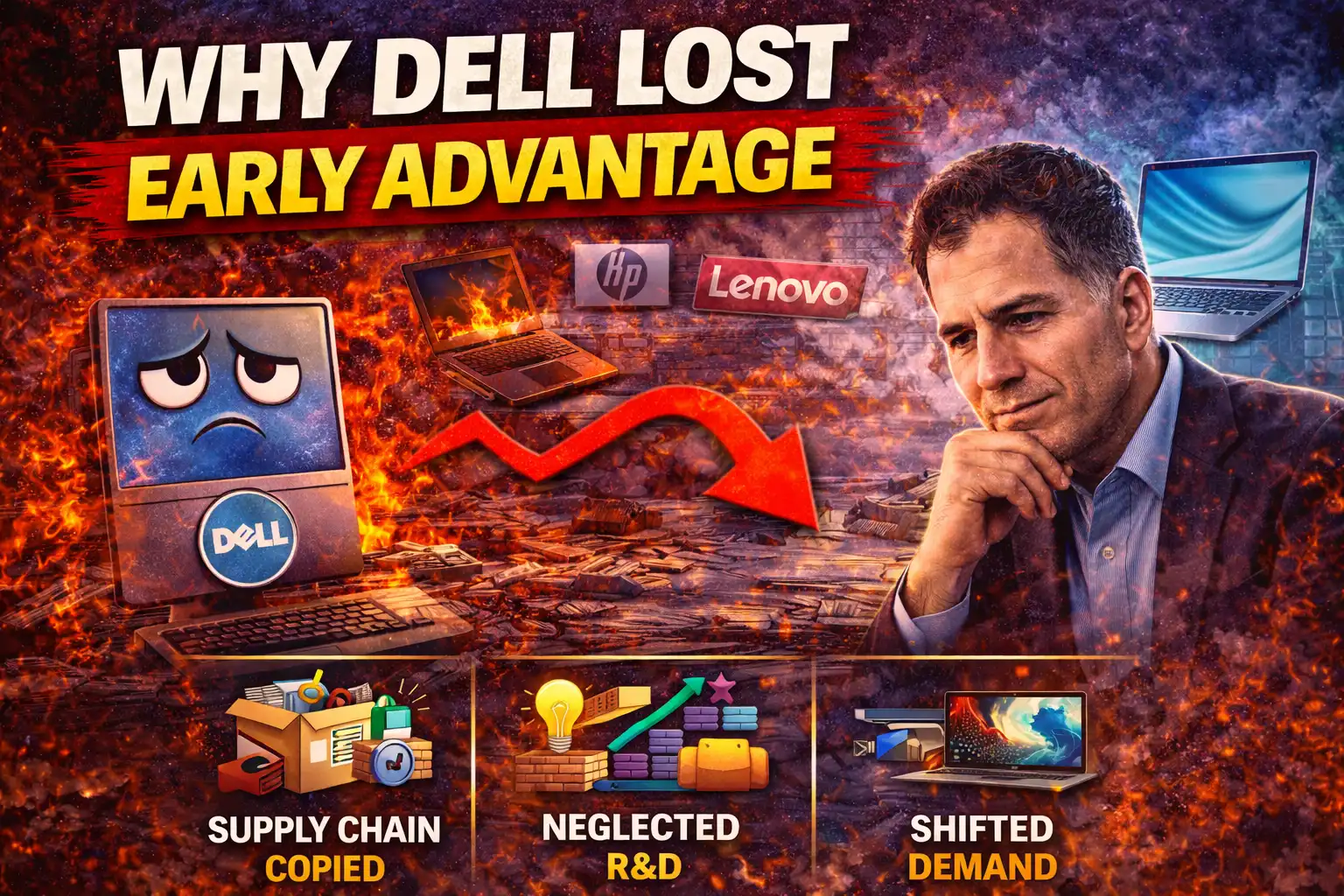
In 2005, Dell was the undisputed king of the PC world. With a revolutionary “Direct Model” and the world’s most efficient supply chain, they were building custom computers faster and cheaper than anyone else. So how did the “Master of Efficiency” become a generic footnote in the age of design?
In this The Case HQ strategy autopsy, we look beyond the supply chain charts to reveal the fatal flaw in Dell’s dominance. We break down the “Efficiency Trap,” the shift from PCs as “work tools” to “lifestyle objects,” and why the world’s best process can’t save a product that no one actually desires.
Visit our website for latest courses: https://thecasehq.com/
Visit our AI Courses: https://thecasehq.com/artificial-intelligence-courses/
Visit our Digital Technology Courses: https://thecasehq.com/digital-technologies/
Visit our Higher Education Courses: https://thecasehq.com/higher-education-courses/
Visit our Quality and Lean Six Sigma Courses: https://thecasehq.com/quality-lean/
Visit our Strategy and Leadership Courses: https://thecasehq.com/strategy-and-management-courses/
Visit our Human Resource Courses: https://thecasehq.com/human-resources/
Visit our Maritime and Shipping Courses: https://thecasehq.com/maritime-shipping/
Responses