

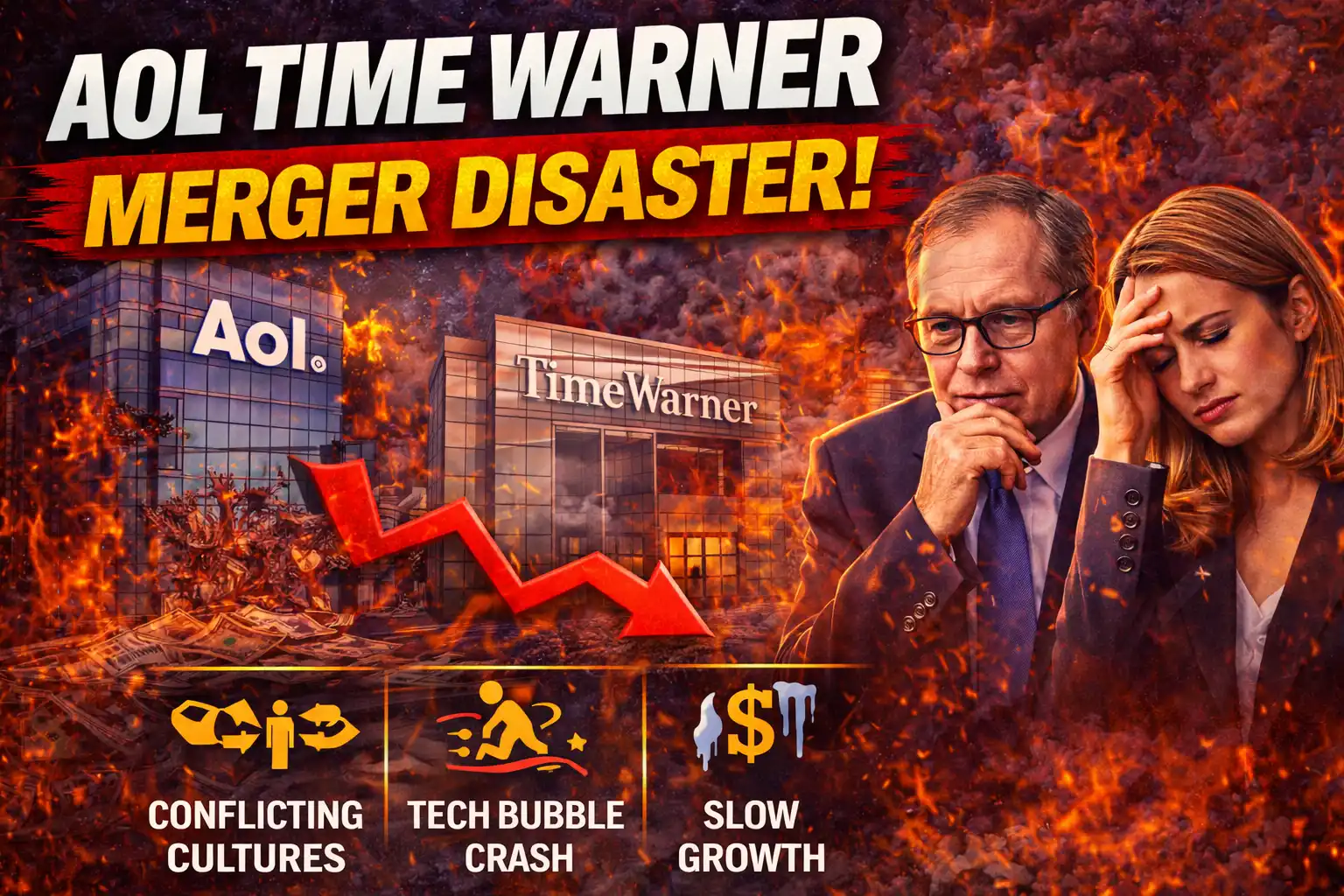
It was supposed to be the “Deal of the Century”—a $164 billion marriage between an internet upstart and a media empire that would define the new millennium. Instead, it became the gold standard for corporate disaster, resulting in a staggering $99 billion loss in a single year.
In this The Case HQ strategy autopsy, we go beyond the stock charts to reveal why the AOL Time Warner merger actually failed. We break down the “Culture War” between jeans and suits, the timing of the dot-com bubble burst, and the fatal “Myth of Synergy” that looked great on a PowerPoint but died on arrival in the real world.
Visit our website for latest courses: https://thecasehq.com/
Visit our AI Courses: https://thecasehq.com/artificial-intelligence-courses/
Visit our Digital Technology Courses: https://thecasehq.com/digital-technologies/
Visit our Higher Education Courses: https://thecasehq.com/higher-education-courses/
Visit our Quality and Lean Six Sigma Courses: https://thecasehq.com/quality-lean/
Visit our Strategy and Leadership Courses: https://thecasehq.com/strategy-and-management-courses/
Visit our Human Resource Courses: https://thecasehq.com/human-resources/
Visit our Maritime and Shipping Courses: https://thecasehq.com/maritime-shipping/
Responses