

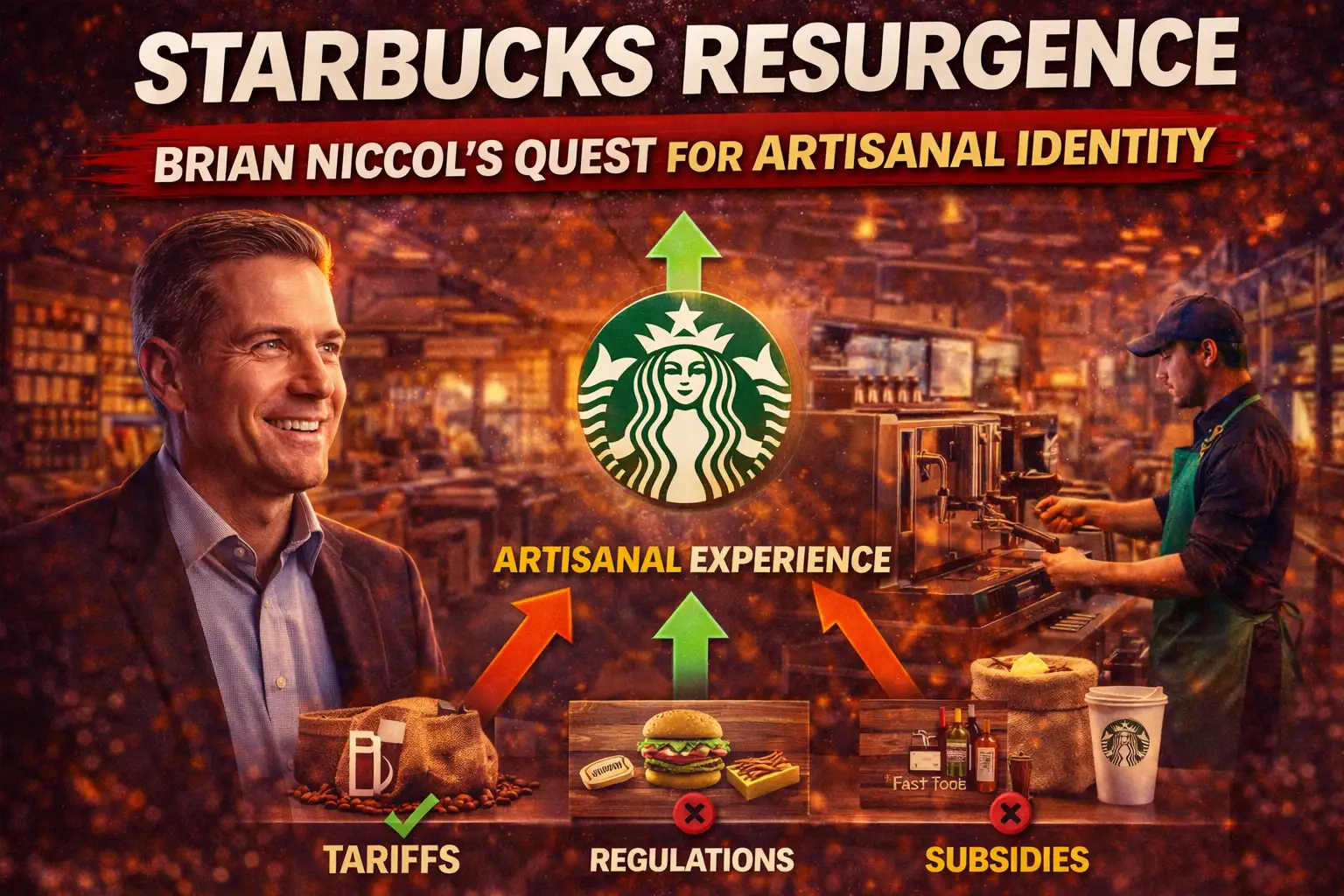
For years, Starbucks has been winning the “Efficiency War” but losing its soul. By turning cafes into high-volume waiting rooms for mobile orders, they traded their “Third Place” identity for fast-food metrics. Now, the world’s biggest coffee chain is trapped in the “Squeezed Middle.” Can a new CEO and a radical operational reset save the premium latte?
In this The Case HQ strategy autopsy, we reveal the hidden damage of Starbucks’ digital success. We break down Brian Niccol’s “De-optimization” playbook, the $billion architectural redesign, and why the company is willingly sacrificing short-term speed to win back long-term brand loyalty.
Visit our website for latest courses: https://thecasehq.com/
Visit our AI Courses: https://thecasehq.com/artificial-intelligence-courses/
Visit our Digital Technology Courses: https://thecasehq.com/digital-technologies/
Visit our Higher Education Courses: https://thecasehq.com/higher-education-courses/
Visit our Quality and Lean Six Sigma Courses: https://thecasehq.com/quality-lean/
Visit our Strategy and Leadership Courses: https://thecasehq.com/strategy-and-management-courses/
Visit our Human Resource Courses: https://thecasehq.com/human-resources/
Visit our Maritime and Shipping Courses: https://thecasehq.com/maritime-shipping/
Responses